
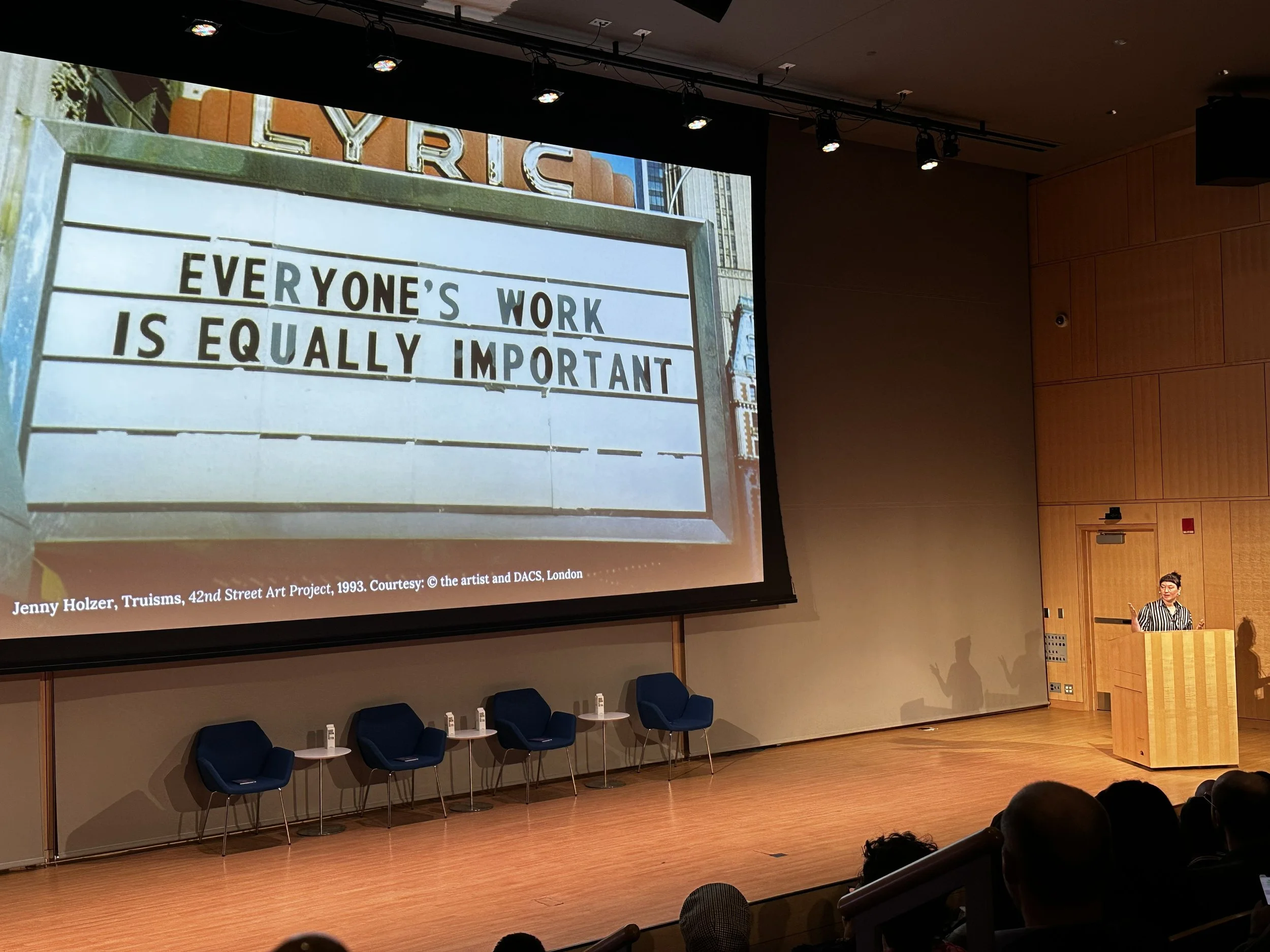
As GMAACC continues to use creative interventions in our community programming, we are reflecting on what it means to commit to working with artists and cultural workers in equitable and sustainable ways. Our work with Deidra Montgomery and Danya Sherman at Congruence Cultural Strategies involves organizing creative workers through Building Creative Power Massachusetts, an incubated project between GMAACC and Congruence Cultural Strategies, where we co-create economic justice solutions for creative laborers and others that the economy tends to leave behind. For the past few years, creative advocacy circles have circulated an article by WBUR that shares how arts and culture events served nearly four times more people than all four major sporting teams in 2019. Yet artists, art, and cultural institutions continue to face harsh cuts to programs that give people jobs, invite communities to create futures, and celebrate cultural identities of cities, towns, and neighborhoods.
When our team attended the Creative Labor: A Boston Cultural Policy Summit on September 18th, we drew inspiration from the fireside chat hosted by Summer L. Williams and Shawn Lacount from Company One Theater featuring Sam Gill (President & CEO, Doris Duke Foundation), and Ali Noorani (President & CEO, Barr Foundation). They discussed what conditions are necessary for artists to thrive, and how our society can better frame art as essential. Noorani mentioned how just as politics is downstream from culture, art is also downstream from culture. Art continues to shape the culture of “now” even in the creative sector’s moment of scarcity. The panel agreed that the answers we seek must come from multiple places and that we must rethink how we approach funding, where we find funding, and how to reinvent the tools of funding.
Building Creative Power MA also co-designed and co-facilitated the afternoon sessions of the Summit with artists and creative practitioners including Ngoc-Tran Vu, Shey Rivera Ríos, and Layanie Oscar. Through three breakout sessions, participants discussed policies impacting freelancers, the state of organizing and working conditions for creatives, and possible ways to explore and experiment different solutions.
We’re inspired by how art has the power to invite discourse, disagreement, and disruption into organizing work and look towards acting upon the strategies learned from this Summit.
Thanks to the Culture & Community Power Fund for a seed grant to explore this work, and to all of the organizers, creatives, experts, and partners who have contributed time and energy to this so far.